
Get Ready To Do Some Yoga
Making Sure That You Have The Right Tools
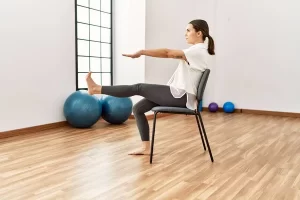
These props help you achieve the proper alignment, balance and make the pose a bit easier. The use of props also minimizes the strain and supports your muscles, thus allowing you to save your energy by exerting less effort on a pose. Yoga props help people with Medical Ailments and the Elderly to cross their limitations. The props provide support, enabling them to do the poses that their ailments or old age prevent them from doing.
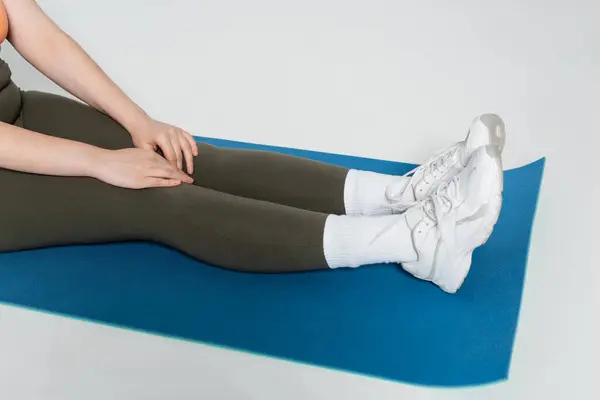
As you might imagine, not much gear is needed for yoga. It is generally practiced in bare feet or socks. You might want to consider a comfortable pair of shoes. Clothing should be loose enough to allow for bending and stretching. Yoga also has its own small set of apparatus. Called “yoga props,” they help make the yoga poses more comfortable, create resistance or give the body something to lean on or bend over.
Yoga is an excellent way to enhance flexibility, strength, and overall well-being. However, incorporating a few yoga props can take your practice to the next level, making it more effective and enjoyable. Whether you’re a beginner or an experienced yogi, understanding the best yoga props and how to use them can lead to significant benefits.
To start with yoga you can just have these basic equipment/tools
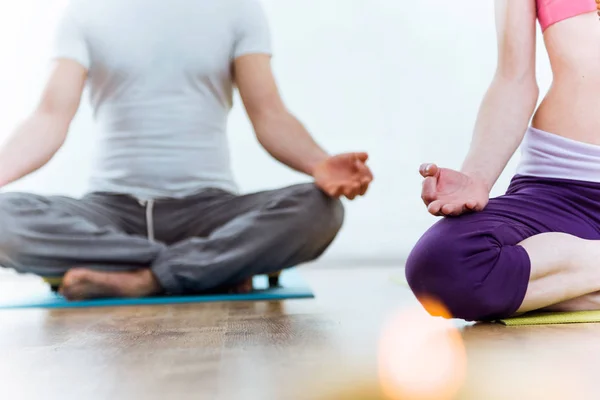
Clothing: Comfortable, breathable clothes are recommended for yoga. You probably want to wear a shirt that is a little bit form-fitting, since in many yoga poses your head comes below your hips, and your shirt can slide down. Any exercise pants or shorts will do, although it is best not to have super slick lycra-type pants since in some poses this may cause you to slip.
Shoes: Yoga is most often done barefoot, which is great news for those of us tired of carrying a bulky pair of athletic shoes around for after work trips to the gym. Yoga studios will often request that you leave your shoes near the entrance.
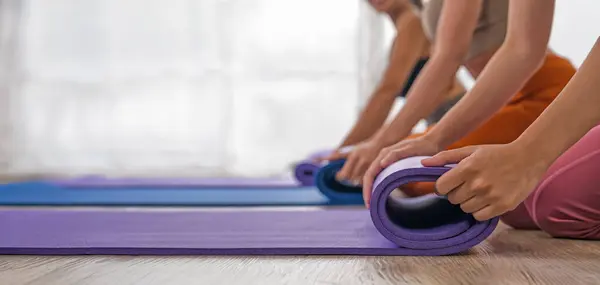
Mats: In gyms and yoga studios, it’s commonplace to use a yoga mat, also called a sticky mat. The mat helps define your personal space. More importantly, it creates traction for your hands and feet so you don’t slip, especially as you get a little sweaty. The mat also provides a bit of cushioning on a hard floor. If you are just getting started with yoga, you may not want to buy a mat right away. Most studios have mats for rent, usually for a nominal fee, per class. The disadvantage to these mats is that lots of people use them, and they can get smelly between washings. Yoga mats can be easily purchased for a little fee, and many studios will allow you to store your mat with them if you become a regular. Always position your mat where you have enough space to stretch and flow freely.
Blankets: Yoga studios often have stacks of blankets available for students to use during class. Grab yourself one or two blankets at the beginning of class. The folded blankets are props to sit and lie on during class. For instance, when sitting in a cross-legged position, it’s nice to put a blanket under you to elevate the hips above the knees. Use them for extra cushioning, particularly under the knees or hips, or to keep warm during savasana. You can layer them for added height in seated forward bends.They come in handy for all sorts of things during class, and if it’s chilly you can use them to cover yourself during final relaxation and restorative poses at the end of class.
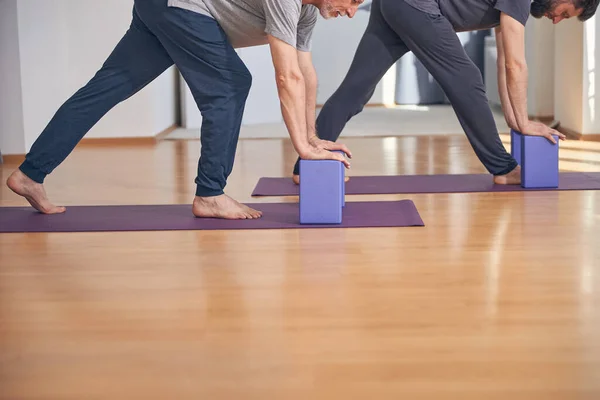
Blocks: Just like blankets, blocks are props to make yourself more comfortable and improve your alignment. Blocks are great for standing poses in which your hand doesn’t reach the floor. Yoga blocks are versatile tools that can aid in achieving proper alignment, making it easier to access more challenging poses and deepen stretches.
Straps: Straps are particularly useful for bound poses if your hands do not reach each other, and for poses where you need to hold onto your feet but cannot reach them.
Bolsters: Bolsters are larger cushions that provide support and stability during restorative poses. They help to relax the body and mind, making them perfect for gentle yoga practices or meditation. To use a bolster effectively, try placing it under your knees during savasana (Corpse Pose) for lower back support or in seated poses to elevate the hips for better alignment. Bolsters can also be used in restorative poses like supported child’s pose, where they provide comfort and assist in deep relaxation.
Essential Yoga Props for Your Fitness Journey
Incorporating yoga props into your fitness journey can enhance your practice significantly. From improving alignment to facilitating deeper stretches, these tools are designed to support you every step of the way. Explore and experiment with these props to find what works best for your unique body and fitness goals. Remember, the goal of yoga is not perfection in a pose but fostering a deeper connection with your body. Embrace the journey, supported by these fantastic tools that enrich your practice.