

Improving Your Posture With Osteopathic Techniques
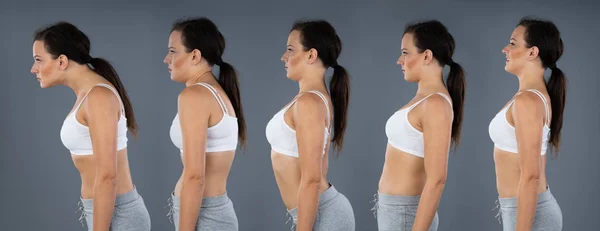
3 Osteopathic Techniques to Help Improve Your Posture -Plus Exercises to Reinforce the Change
Good posture is about much more than simply “standing up straight.”
Having a good posture reflects how your joints, muscles, fascia and nervous system work together to support movement. Those hours spent sitting at a desk, looking down at a phone, driving or training with repetitive movement patterns can gradually influence how we hold ourselves.
Osteopathic medicine takes a whole-body approach to movement and function. Osteopathic manipulative techniques can be used to address areas of restriction or tension, while targeted exercise can also help to reinforce improved movement patterns.
Here we are considering three osteopathic techniques that may complement a posture-focused fitness programme, along with exercises which you can incorporate into your routine.
1. Myofascial Release
Creating Space for Better Movement
The myofascial system connects muscles and surrounding connective tissues throughout the body. Areas of increased tension or restricted movement may influence how comfortably you move and maintain an upright position.
An osteopathic practitioner may use gentle, sustained pressure and positioning to address areas of fascial restriction. For someone who spends much of the day sitting, treatment may focus on areas such as the chest, shoulders, upper back or hips, depending on the individual’s assessment.
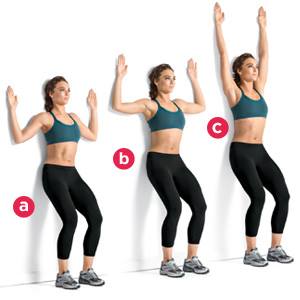
The exercise prescription: Wall Angels
Wall angels are a simple way to practise shoulder and upper-back control after addressing mobility restrictions.
How to perform:
- Stand with your back against a wall, feet slightly away from it.
- Gently draw your ribs down without forcing your lower back flat.
- Position your arms in a “W” shape.
- Slowly slide your arms upward while keeping the movement comfortable.
- Return to the starting position with control.
Prescription: 2–3 sets of 8–12 repetitions, 3–5 days per week.
Focus: Move slowly rather than trying to achieve maximum range. Your goal is controlled movement, not forcing your shoulders against the wall.
2. Muscle Energy Technique
Teaching Your Body to Move Differently
Muscle energy technique (MET) uses the patient’s own muscular contraction against resistance. The practitioner positions a joint or muscle barrier, asks the patient to gently contract, and then uses the resulting relaxation to work toward improved range of motion.
For posture, MET may be incorporated when specific muscular or joint restrictions are contributing to difficulty achieving a comfortable position.
The important point is that manual treatment doesn’t replace active movement. Once mobility has been improved, exercise can help you develop strength and control in that newly available range.
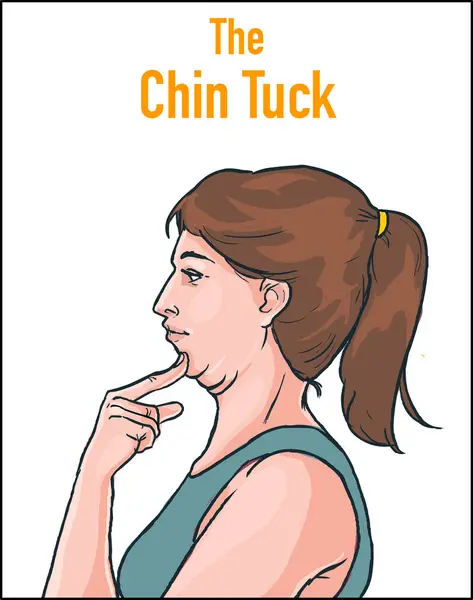
The exercise prescription: Chin Tucks
A forward-head position is common during prolonged screen use. Chin tucks provide a simple way to practise cervical positioning and deep neck muscle control.
How to perform:
- Sit or stand tall with your eyes looking straight ahead.
- Gently draw your chin backward, as though making a small “double chin.”
- Keep your head level rather than looking down.
- Hold for 3–5 seconds.
- Relax and repeat.
Prescription: 2–3 sets of 8–10 repetitions, once or twice daily.
Tip: The movement should be subtle. Avoid aggressively pulling your head backward or creating tension in your neck.
3. Articulatory Technique
Improving Joint Mobility Through Movement

Osteopathic articulatory techniques involve controlled movement of a joint through its range of motion. The practitioner uses repeated, rhythmic movement to address restrictions and encourage mobility.
For posture, improving mobility in areas such as the thoracic spine and shoulders can make it easier to adopt and maintain a more comfortable upright position.
However, mobility is only one piece of the puzzle. The body also needs strength and endurance to maintain good movement habits during everyday activities.
The exercise prescription: Thoracic Extension
A mobile thoracic spine can help support comfortable upright movement and shoulder function.
How to perform:
- Sit on a chair with your feet firmly on the floor.
- Place your hands behind your head.
- Keep your lower body stable.
- Gently extend your upper back over the back of the chair.
- Avoid forcing the movement or arching excessively through your lower back.
- Return to the starting position.
Prescription: 2 sets of 8–10 controlled repetitions, 4–5 days per week.
You can pair this with rows to strengthen the muscles responsible for scapular control.
Row prescription: 2–3 sets of 10–15 repetitions, 2–3 times per week.
Lets Put It All Together
Osteopathic treatment and exercise can work together, but neither should be viewed as a magic solution for posture. Posture is dynamic: the body constantly changes position in response to movement, fatigue, environment and task demands.
A simple weekly posture-focused routine might look like this:
| Exercise | Sets × Reps | Frequency |
|---|---|---|
| Wall angels | 2–3 × 8–12 | 3–5 days/week |
| Chin tucks | 2–3 × 8–10 | Daily |
| Thoracic extensions | 2 × 8–10 | 4–5 days/week |
| Rows | 2–3 × 10–15 | 2–3 days/week |
The bigger goal is not to hold one “perfect” posture all day. Instead, aim to move regularly, build strength and mobility, and develop the ability to comfortably change positions.
If you experience persistent pain, numbness, weakness, dizziness or other concerning symptoms, seek assessment from an appropriately qualified healthcare professional rather than attempting to self-treat with manual techniques.
The Bottom Line
Osteopathic techniques such as myofascial release, muscle energy and articulatory techniques may be useful components of an individualized approach to musculoskeletal function. Combining appropriate hands-on care with progressive exercise can help turn short-term changes in mobility into practical improvements in movement, strength and body awareness.
Think less about forcing yourself into “perfect posture” and more about building a body that is strong, mobile and capable of moving well in many different positions.
Important: Osteopathic techniques should be performed by an appropriately trained healthcare professional. The exercises given are general fitness and should be adapted to your specific and individual needs, especially if you have pain, an injury or an underlying medical condition.