
No Mat Required: The Surprising Fitness Benefits of Chair Yoga
Chair Yoga Is Having a Moment. Here’s Why Fitness Experts Love It
Whenever we think of yoga, we think that it requires a mat, plenty of floor space and the flexibility to twist yourself into a pretzel? Think again… Chair yoga, brings many of the familiar yoga movements and breathing techniques to a chair, making the practice accessible to people who may find traditional floor-based yoga uncomfortable, challenging or simply inconvenient.
Please don’t mistake “chair” for “easy.”
According to yoga instructors, practicing from a chair can still challenge your muscles, improve your mobility and encourage better body awareness. It can also be a convenient way to add more movement to your day. Whether you are new to exercise, returning after a break or simply looking for a gentler workout.
So, What Exactly Is Chair Yoga?
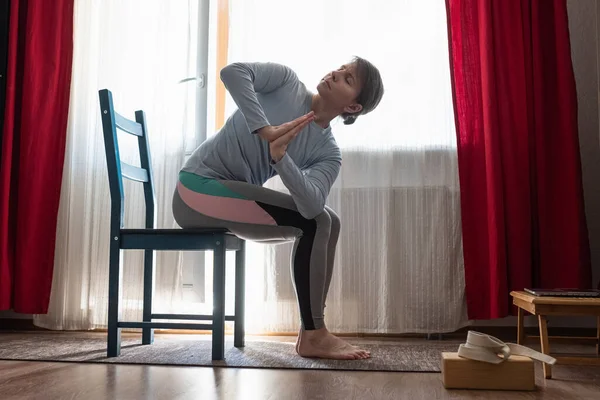
Chair yoga is a modified form of yoga in which a sturdy chair provides support during poses and movements. Depending on the class, you may remain seated throughout the session or use the chair while standing for additional support. A typical routine can combine gentle stretches, joint mobility exercises, balance work, breathing exercises and relaxation.
The primary goal isn’t to perform complicated poses. Instead, chair yoga emphasizes controlled movement and finding a range of motion that feels appropriate for your body.
That makes it particularly appealing to people who don’t feel comfortable getting down onto or back up from the floor.
The Benefits Go Beyond Flexibility
One of the biggest misconceptions about chair yoga is that its benefits are limited to stretching. This is not so. In reality, a thoughtfully designed session can work several aspects of physical fitness, and lead to several benefits.
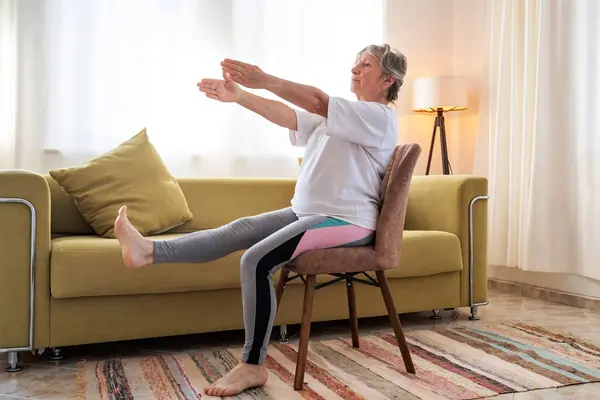
- It Can Improve Mobility – Everyday movements turning your head, reaching overhead, rotating your torso or bending your knees all require mobility. Chair yoga incorporates controlled movements through different ranges of motion, which can help you practice moving your joints comfortably. Regular movement may also help counter some of the stiffness associated with spending long periods sitting.
- It Can Build Gentle Strength – Chair yoga isn’t traditionally thought of as strength training, but certain movements can challenge your muscles. Standing from a chair, holding a supported squat position or repeatedly moving your arms against gravity can require muscular effort. For a greater challenge, instructors may incorporate longer holds or controlled repetitions. The key is that the workout can be adjusted to your current ability.
- It Can Challenge Your Balance – Balance becomes especially important as we get older, but it matters at every stage of life. Chair yoga can introduce balance exercises with the chair nearby for support. Depending on your ability, you might practice shifting your weight, standing on one leg while holding the chair or transitioning slowly between seated and standing positions. Since the chair provides an accessible source of support, these movements can feel less intimidating than unsupported balance exercises.
- It Encourages Better Posture – Hours spent at a desk, behind a steering wheel or looking down at a phone can leave many people feeling rounded through the shoulders and upper back. Chair yoga often incorporates movements that encourage awareness of spinal alignment and shoulder positioning. Simple exercises such as opening the chest, rolling the shoulders and gently rotating the upper body can provide a welcome movement break during a sedentary day.
- It Can Help You Slow Down – Not every workout needs to leave you drenched in sweat. Chair yoga, often combines movement with deliberate breathing and moments of relaxation. That slower pace can encourage you to pay attention to how your body feels rather than rushing from one movement to another. For many practitioners, that mind-body focus is just as important as the physical component.
You Don’t Need to Be Flexible
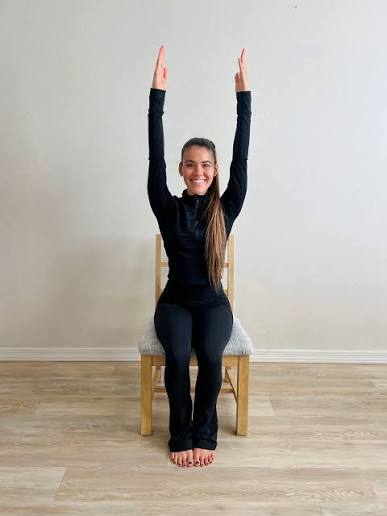
This might be the most important thing to understand before your first class.
You do not need to be flexible to do yoga. In fact, flexibility is one of the things people often work on through consistent practice. Chair yoga can be modified for different bodies and abilities. You might perform a movement with a smaller range of motion, keep your feet planted instead of lifting them, or use the chair for additional stability. There’s no prize for stretching farther than the person next to you.
The objective is controlled, comfortable movement and not forcing your body into a particular shape.
Try This Simple Chair Yoga Routine
Ready to give it a try? – Choose a sturdy chair that does not have wheels and place it on a stable, nonslip surface. Wear comfortable clothing that allows you to move freely. Then try this short sequence.
Seated Mountain Pose
- Sit toward the front of the chair with your feet comfortably planted on the floor.
- Lengthen your spine without stiffening it.
- Let your shoulders relax and place your hands on your thighs.
- Take several slow breaths, noticing how your body feels.
Seated Cat-Cow
- Place your hands on your thighs.
- As you inhale, gently lift your chest and allow your spine to lengthen.
- As you exhale, gently round your upper back and let your chin move slightly toward your chest.
- Move slowly and comfortably through the position.
- Repeat several times.
Seated Spinal Twist
- Sit tall with both feet on the floor.
- Place one hand on the opposite thigh and gently rotate your torso.
- Keep the movement comfortable rather than trying to twist as far as possible.
- Return to center and repeat on the other side.
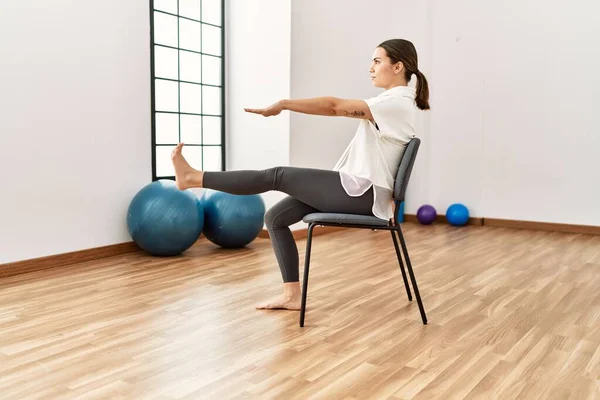
Seated Leg Extension
- Sit tall and extend one leg forward until it’s comfortably straight.
- Pause briefly, then lower it back down. Repeat on the opposite side.
- This simple movement can engage the muscles around your legs while taking your joints through a controlled range of motion.
Supported Standing
- Move toward the edge of the chair and place your feet firmly beneath you.
- Using your legs, and the chair or arm-rests only as much as needed. Stand up slowly.
- Pause, then sit back down with control.
- Repeat several times at a comfortable pace.
If standing or sitting is difficult or causes pain, skip this movement and choose a seated alternative.
Finish With Breathing
- Return to a comfortable seated position.
- Close your eyes if that feels comfortable, relax your shoulders and take several slow, easy breaths.
Give yourself a minute before moving on with your day.
How Often Should You Do Chair Yoga?
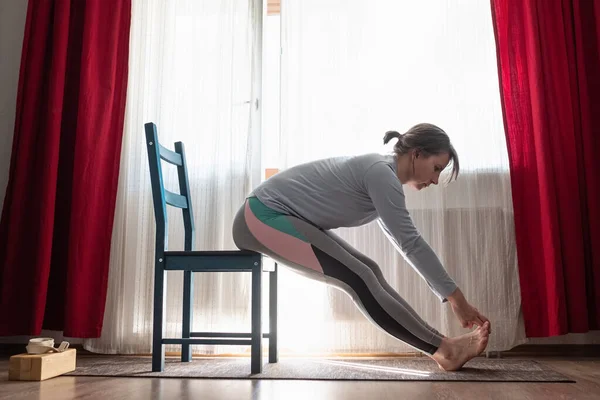
There’s no need to start with a long session. Even 10 to 15 minutes can be a practical starting point. As the movements become familiar, you can gradually work toward longer sessions or incorporate chair yoga several days per week.
Consistency matters more than duration. You could even use chair yoga as a movement break during your workday: five minutes in the morning, another short session in the afternoon and a few minutes of breathing or stretching in the evening.
A Few Safety Tips
Chair yoga should feel challenging in a manageable way and not painful. Choose a stable chair and give yourself enough room to move. Avoid bouncing or forcing a stretch, and stop if you experience sharp pain, dizziness, unusual shortness of breath or another concerning symptom.
If you have an injury, significant mobility limitations or a medical condition that affects exercise, consider talking with a qualified healthcare professional or appropriately trained instructor before beginning a new routine. Remember – exercises which depend on your balance, should be performed in a safe environment, with the chair positioned securely and additional support available if necessary.
Getting Going
Chair yoga may look deceptively simple, but its value is in its accessibility. You can work on mobility, strength, balance, posture, breathing and body awareness without needing a gym or a large workout space. For beginners, older adults, people with mobility limitations or anyone who spends too much of the day sitting, that convenience can make it easier to move consistently.

You don’t have to touch your toes. You don’t need an expensive mat., and you certainly don’t need to look like a yoga instructor. All you really need is a sturdy chair, a few minutes and a willingness to move.